CRM and sales tools
The problem
Leads and follow-ups end up scattered across sheets and chats.
CRM and sales tools
Typical modules
- Lead and contact management
- Sales pipeline
- Follow-up reminders
Custom SaaS Development
We design, develop and scale custom SaaS platforms that solve real business problems.
How it gets built
Scroll through the stages to see a SaaS product take shape, from a blank canvas to a platform that can grow.
We start with your idea, not with code.
We talk through the problem you want to solve and who will use the product.
What you getWorkshop and problem statement
We list every feature you can think of, then sort them into what ships first and what can wait.
You get a simple roadmap, so the first version stays focused.
What you getScoped MVP and roadmap
We begin with plain wireframes to agree on layout and flow.
Then we add your brand colours and real interface styling, so you can click through it before it is built.
What you getClickable designs
The designs become a working product: sign-in, dashboard and settings.
Behind the screens we set up the logic, the database and the cloud setup it runs on.
What you getWorking product
We set up your subscription plans and payments, then work through a launch checklist.
Domain, SSL, monitoring and backups are checked before the product goes live.
What you getLaunch checklist and live product
One shared platform can serve many customers, each with their own space and roles.
After launch we keep fixing, improving and adding features as your product grows.
What you getSupport and improvements
We start with your idea, not with code.
We talk through the problem you want to solve and who will use the product.
What you getWorkshop and problem statement
Illustrative interface
Architecture
Every SaaS product is a stack of layers. Pick a layer to see what it does for your business.
What people see and tap
What it does for your business
The screens your customers and team use every day: pages, forms and dashboards. A clear, quick interface that works on phones, tablets and desktops is what makes people keep using the product.
Tools we use
The logic behind the screens
What it does for your business
Handles sign-in, permissions and your business rules, and gives other software a safe way to talk to your product. It is the engine that makes each screen actually do something.
Tools we use
Where your information lives
What it does for your business
Stores your customers, content and activity in an organised way, so information can be found, updated and reported on quickly as your product grows.
What keeps it online
What it does for your business
The servers and setup that keep your product available, plus a routine for releasing updates in a controlled way. It is what lets you add customers without rebuilding anything.
Connections to your other tools
What it does for your business
Links your product to the tools your business already uses, such as payments, a CRM, email, analytics or WhatsApp, so work does not have to be copied by hand. Which ones you need depends on your product.
Single vs multi-tenant
The same product can be built two ways. Switch between them to see the difference.
Each customer gets their own separate copy of the app.
It suits custom software built for one business.
Why it mattersEach copy is updated on its own, so every change takes more effort to roll out.
One shared platform serves many customers, each in their own space.
Roles such as admin, staff and customer decide who can see and do what.
Why it mattersOne update reaches everyone. Subscriptions and roles are built in. Easier to maintain.
Product types we build
These are the types of product we build. They are examples of what is possible, not a list of products we have delivered.
The problem
Leads and follow-ups end up scattered across sheets and chats.
CRM and sales tools
Typical modules
The problem
Front-desk time goes into phone calls and manual scheduling.
Clinic and appointment platforms
Typical modules
The problem
Courses and learners are managed by hand, across several tools.
Learning platforms (LMS)
Typical modules
The problem
Bookings clash or get lost between calls and messages.
Booking and scheduling
Typical modules
The problem
Teams rely on spreadsheets and email chains for daily work.
Internal business tools
Typical modules
The problem
Off-the-shelf software does not fit how your business works.
Custom web apps
Typical modules
Sketch your MVP
Tick what your first version needs. We will use it as the starting point for a discovery call.
Illustrative interface
Working together
Different products need different set-ups. We agree the one that fits after a discovery call.
A clearly defined product or tool where the requirements are known up front.
How it works
What you get
Founders who want a focused first version in front of real users.
How it works
What you get
Products that need steady, continuous development alongside your own team.
How it works
What you get
Live products that need to stay healthy and keep improving.
How it works
What you get
Real work
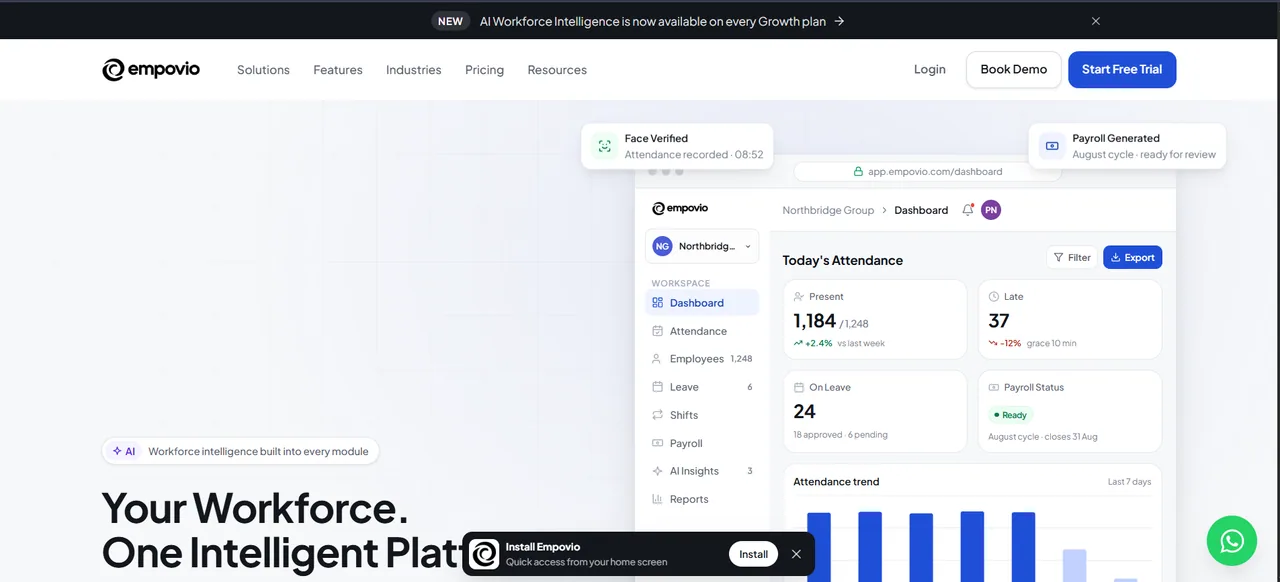
A SaaS product designed and developed by Media Guys.
A workforce management platform covering attendance, leave, shifts, payroll and AI insights.
More SaaS work is shared on request.
Why Media Guys
We start from the problem and the user, not the feature list.
Built so the product can grow past its first version.
Clear, simple screens people can use without training.
Work in stages with regular progress you can see.
We stay available for fixes and improvements after launch.
FAQ
Yes. We design and build custom SaaS products around your idea and your users, instead of forcing your idea into a ready-made template.
It depends on the scope. We split the work into phases and share a plan after discovery, so you know what is built first and what comes next.
Yes. We start by talking through the problem and who it is for, then define a focused first version and a roadmap before any development begins.
On the frontend we work with React, Next.js and Tailwind CSS, and on the backend with Node.js and PHP. We choose the tools that fit your product.
Yes. We can continue with bug fixes, improvements and new features after launch.
Tell us about your idea. We will help you shape a focused first version and suggest a plan.